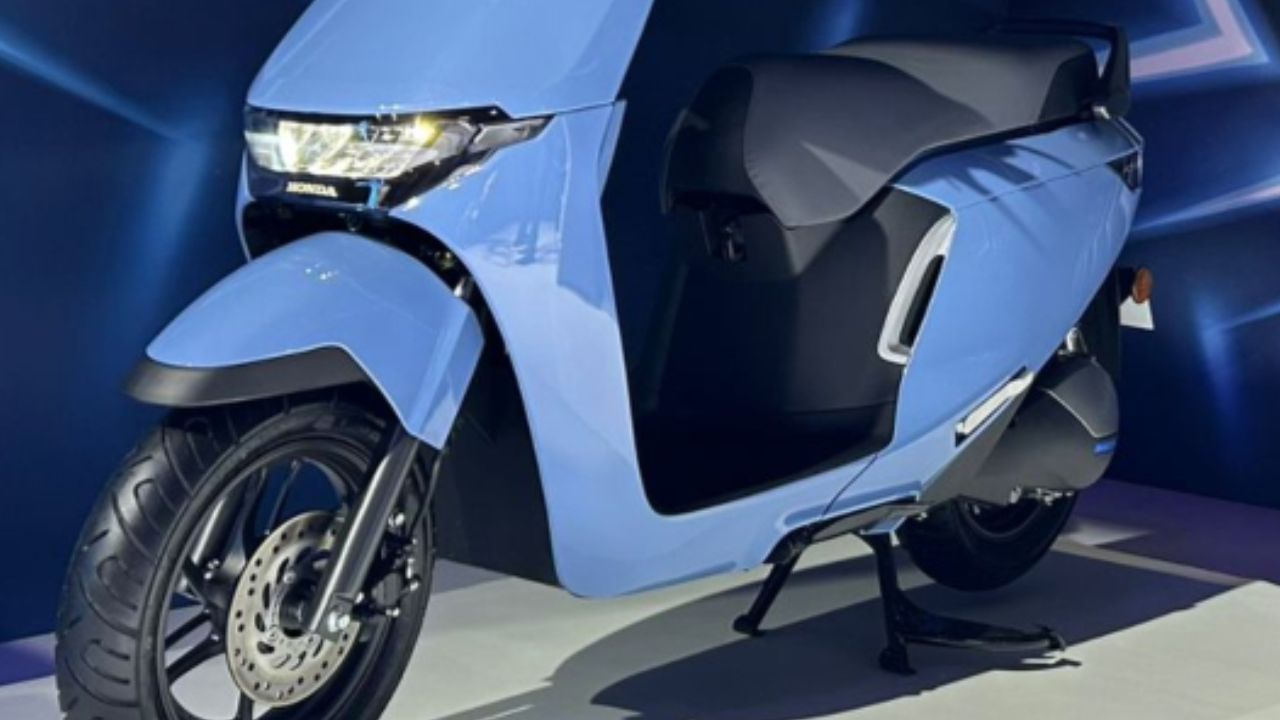
Honda’s foray into the electric two-wheeler market this year included two e-scooters: the Activa e and the QC1. After six months of production and sales, the company’s performance reveals key differences. Between February and July 2025, Honda manufactured 11,168 units, with 5,173 units sold, and deliveries beginning in March 2025. The Activa e features a swappable battery system, targeted at personal commuters. The Honda QC1, in contrast, utilizes a fixed battery and is designed for gig-workers and budget-conscious users. Over the first five months, 4,950 units were sold, with QC1 accounting for the majority at 4,252 units, leaving only 698 Activa e sales. This indicates a significant 86% market share for the QC1. Despite its stylish design and advanced features, the Activa e faces hurdles. Its prospects depend heavily on the expansion of Honda’s battery swapping infrastructure. The scooter is available in two variants, with the standard model costing ₹1,17,428 ex-showroom and the RoadSync Duo costing ₹1,52,028 ex-showroom. It offers a claimed range of 102 km, a top speed of 80 km/h, and can reach 60 km/h in 7.3 seconds. A key limitation is the requirement to swap batteries at dedicated stations, not charge them at home, which hinders sales. Only a limited number of swapping stations are currently available, primarily in Bangalore, with expansion planned for Delhi and Mumbai. The QC1, priced starting at ₹90,022 ex-showroom, is gaining traction due to its affordability and home-charging capability. It is the most economical Japanese electric scooter in the Indian market. It boasts a range of 80 km and achieves 40 km/h in 9.4 seconds, with a top speed of 50 km/h. The scooter is available for purchase in Bangalore, Hyderabad, Mumbai, Pune, Delhi, and Chandigarh.
Honda’s Electric Scooter Sales Data: Activa e Struggles, QC1 Gains Ground
 By The Chhattisgarh2 Mins Read