

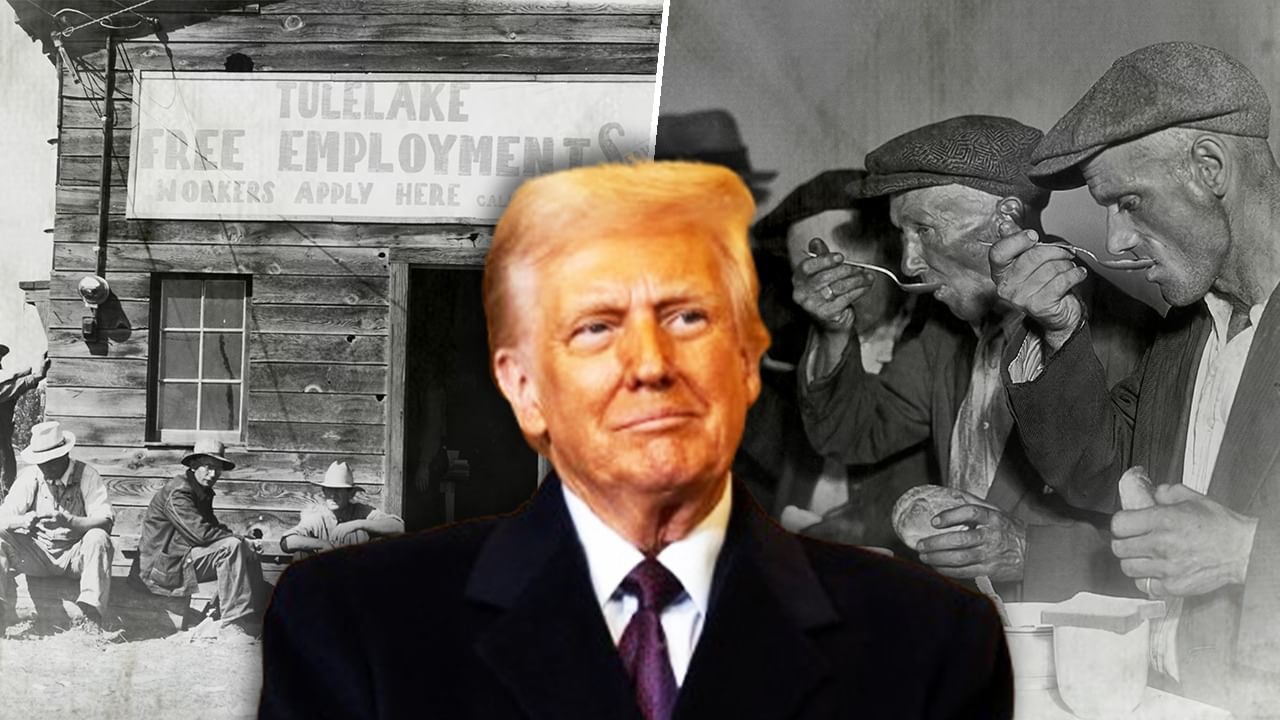
President Donald Trump’s warnings about potential economic consequences of trade tariffs have brought the specter of the 1929 Great Depression to the forefront. This catastrophic period in history, also known as ‘The Great Depression,’ caused a significant downturn in global economic indicators such as production, income, trade and employment, and brought widespread famine and poverty. Numerous industries collapsed, leaving even prominent industrialists in debt.
The genesis of the crisis can be traced to the decade after World War I. The war had disrupted global power dynamics and destabilized the international financial system. Post-war, the U.S. and Japan expanded their manufacturing capabilities, leading to overproduction of goods in the market and economic losses for the manufacturers.
Agricultural sector wasn’t spared. Agricultural improvements following the end of the war, resulted in higher crop yields. As a result, international prices of grains plummeted, leaving farmers unable to recover their production costs. To maintain their income, farmers increased production, which in turn further depressed prices, pushing the agricultural community toward financial ruin.
The ‘Black Tuesday’ stock market crash of October 24, 1929, marked a pivotal moment, with the New York Stock Exchange experiencing a 50% decline and corporate profits plunging by over 90%. This triggered a cascade of economic events.
The United States had extended considerable credit to its allies during World War I. When the US decided to stop lending in 1929, it caused financial upheaval in many nations. This decision contributed to the collapse of European banks. Consequently, the value of currencies in several nations fell drastically, and Latin America also experienced economic strain.
With the deepening depression, American banks stopped providing loans and enforced debt collections. This situation severely impacted farmers, the middle class, and industrialists, resulting in widespread financial struggles. Many families couldn’t meet their financial obligations, resulting in the repossession of homes and vehicles.
The economic upheaval resulted in the closure of thousands of banks and over 100,000 businesses. This led to mass unemployment. The unemployment rate increased dramatically from 1.6 million in 1929 to reach 14 million by 1933.
Malnutrition and starvation became rampant. In 1931, approximately 100 people died of starvation in New York hospitals, with countless more succumbing to diseases related to malnutrition. A lack of access to adequate medical care further exacerbated these problems. In New York, malnutrition affected a significant portion of children.
As a result of these conditions, many Americans were forced to become homeless. By 1932, more than 250,000 people were unable to keep up with mortgage payments. Evictions followed for those unable to meet rent or mortgage obligations, leading to people seeking shelter on streets and in parks. Basic necessities became unaffordable.
Throughout various cities, shantytowns known as ‘Hoovervilles’ sprang up, reflecting public dissatisfaction with President Hoover. Desperate individuals resorted to extreme measures, including intentionally getting arrested to secure essentials like shelter and food.
The Great Depression persisted for over a decade, with conditions gradually improving by 1939. The onset and expansion of World War II stimulated manufacturing, provided employment for women, and drafted the unemployed men, finally bringing an end to the depression.