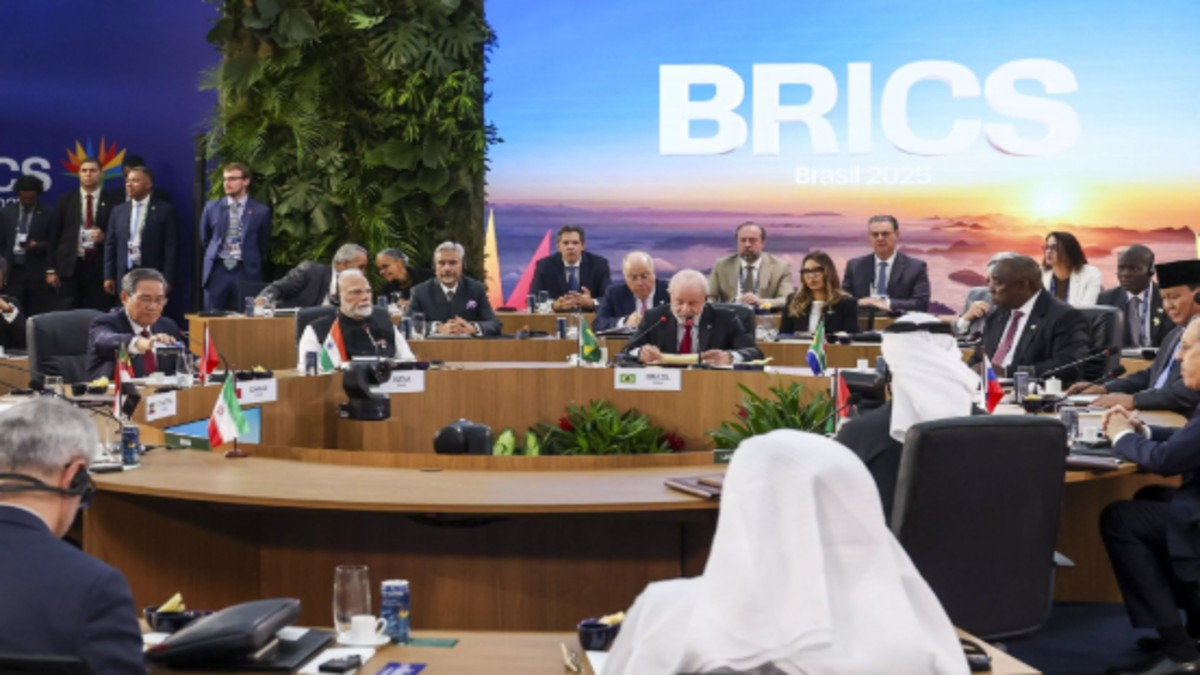
The BRICS nations have officially welcomed Indonesia into their fold as a full member, and have also brought on board ten partner countries: Belarus, Bolivia, Kazakhstan, Nigeria, Malaysia, Thailand, Cuba, Vietnam, Uganda, and Uzbekistan. This was confirmed in the joint declaration released at the 17th BRICS Summit in Rio de Janeiro, Brazil. The summit also focused on critical global issues. The declaration underscored the adoption of the BRICS Leaders’ Framework Declaration on Climate Finance, and the BRICS Leaders’ Statement on the Global Governance of Artificial Intelligence, alongside the launch of the BRICS Partnership for the Elimination of Socially Determined Diseases. Indian Prime Minister Modi commented on the evolution of BRICS and the need to modernize global institutions, emphasizing the importance of reforming organizations like the UN Security Council and the WTO to reflect contemporary challenges. The BRICS group, initially formed in 2006, has grown over time, including the addition of South Africa, and more recently, Egypt, Ethiopia, Iran, and UAE, demonstrating its adaptability and global influence.
Indonesia Accepted as BRICS Member; 10 Additional Nations Partner with the Bloc
 By The Chhattisgarh1 Min Read