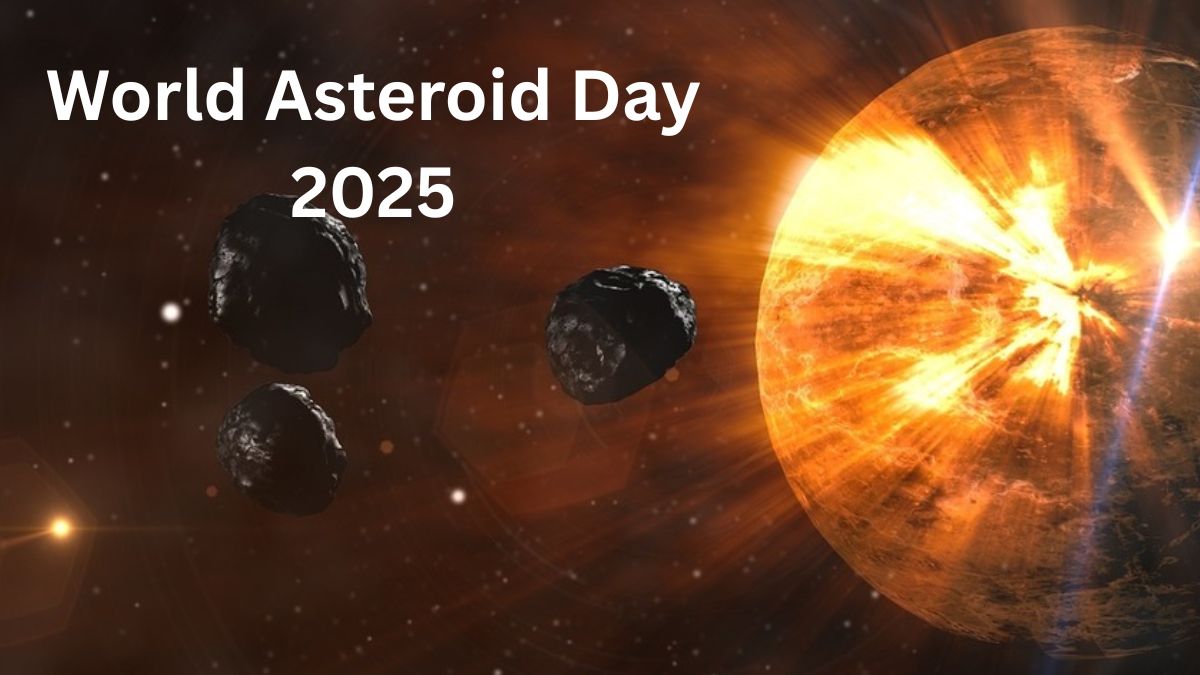
Every year on June 30th, World Asteroid Day is observed to educate and inform the public about the significance of asteroids and the potential dangers they represent. This day is designed to promote awareness of space science, the risks of asteroid collisions, and the importance of continuous space monitoring. The United Nations General Assembly officially acknowledged World Asteroid Day in 2016, choosing June 30th to mark the anniversary of the 1908 Tunguska event in Russia, where a large asteroid explosion destroyed a vast area of forest. The day was conceived by Dr. Brian May, Gregg Richter, and numerous astronauts and researchers. The main purpose of World Asteroid Day is to educate people about the scientific and astronomical importance of asteroids and to explain why it’s essential to find and monitor celestial objects (NEOs) near Earth. Additionally, it promotes the planetary protection missions run by space agencies like NASA and ESA. Scientifically, the study of asteroids gives valuable insights into the early solar system due to the presence of ancient elements. Identifying dangerous asteroids in a timely manner can help prevent collisions, protecting Earth. World Asteroid Day 2025 reminds us of Earth’s vulnerability to space-based threats, and it emphasizes the need for scientific efforts, observations, and global cooperation to keep our planet safe. Around the world, space agencies, educational institutions, and science centers organize online seminars, lectures, and workshops, often highlighting missions such as NASA’s DART and ESA’s Hera, which focus on methods of asteroid deflection.
Exploring the Cosmos: World Asteroid Day 2025 and the Imperative of Space Monitoring