

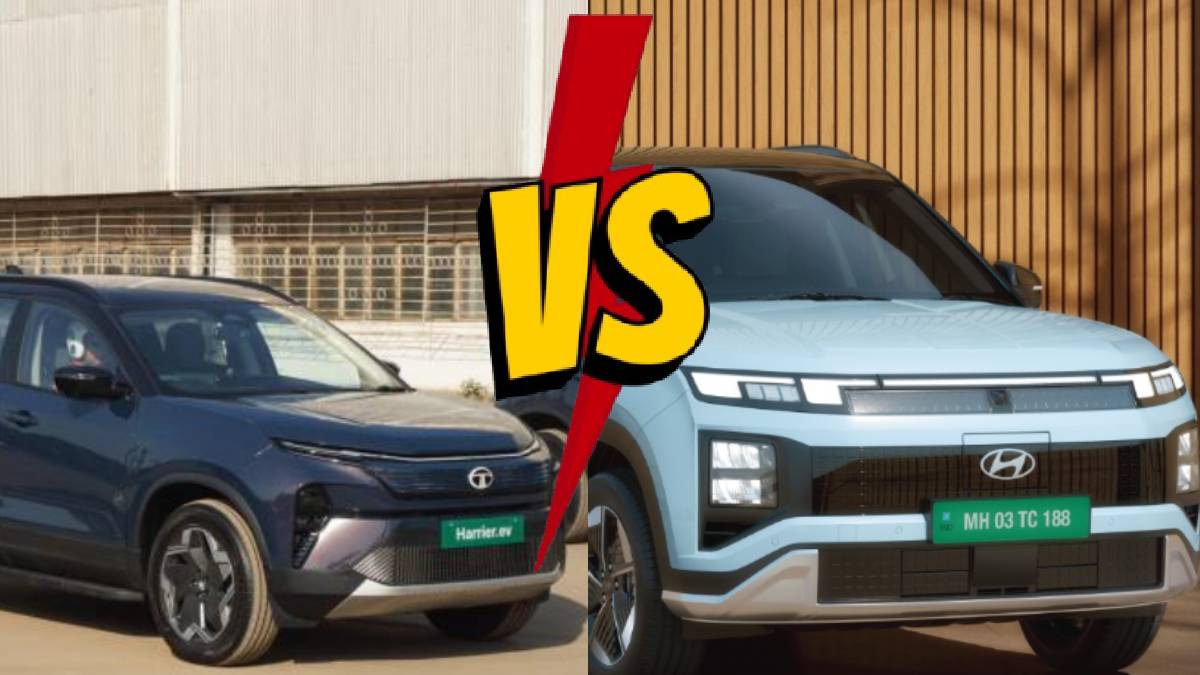
The electric SUV landscape is rapidly expanding, giving consumers a wide array of choices. From the Hyundai Creta Electric to the anticipated Tata Harrier EV, there are several EVs designed for accessible, eco-friendly transportation. This analysis provides a comparative overview to aid consumers in finding the most suitable EV for their needs, examining range, specifications, features, and charging times.
**Hyundai Creta Electric:**
Hyundai’s entry into the affordable EV market is the Creta Electric. Converting existing ICE models into EVs helps manufacturers save on costs, which can be reflected in competitive pricing. The Creta Electric is expected to be offered with two battery pack options: 51.4 kWh and 42 kWh. The 51.4 kWh battery version is estimated to deliver a range of approximately 473 km on a full charge. The vehicle can accelerate from 0 to 100 km/h in 7.9 seconds. It also includes Vehicle-to-Load (V2L) technology, allowing users to charge external devices.
**Mahindra BE-6:**
The Mahindra BE-6 boasts an electric motor that produces 282 bhp and approximately 380 Nm of torque. Featuring a rear-wheel-drive layout, it will have battery pack options of 59 kWh and 79 kWh, with each expected to offer a range of around 500 km on a single charge.
**Mahindra XEV-9:**
The Mahindra XEV-9 is projected to provide a driving range of about 500 km on a single charge. It can accelerate from 0 to 100 km/h in just 6.7 seconds. To enhance the driving experience, the XEV-9 will include a three-screen layout with 12.3-inch high-resolution displays and Level 2 ADAS safety features, such as crash avoidance and collision warning systems. The BE-6, also from Mahindra, will also have the same 500km range.
**Tata Curvv EV:**
The Tata Curvv EV will be available with two battery pack options, a 45 kWh and a 55 kWh. The 55 kWh battery variant will provide a range of about 502 km, accelerating from 0 to 100 km/h in 8.6 seconds. It generates 123 PS of power and a peak torque of 215 Nm. The 45 kWh version will offer a range of about 430 km, accelerating from 0 to 100 km/h in 9 seconds. It offers 110/150 PS of power with a peak torque of around 215 Nm. Both variants will come with Eco, City, and Sport drive modes, V2L, and V2V charging capabilities.
**Quick Comparison of Key Specs:**
[Table summarizing the comparison of BE-6, XEV-9, Hyundai Creta EV, Tata Curvv, MG Windsor, and Tata Harrier EV based on range, acceleration, battery, features, drivetrain, total power, torque, charging time, and price.]
More EV models are planned for future releases.